


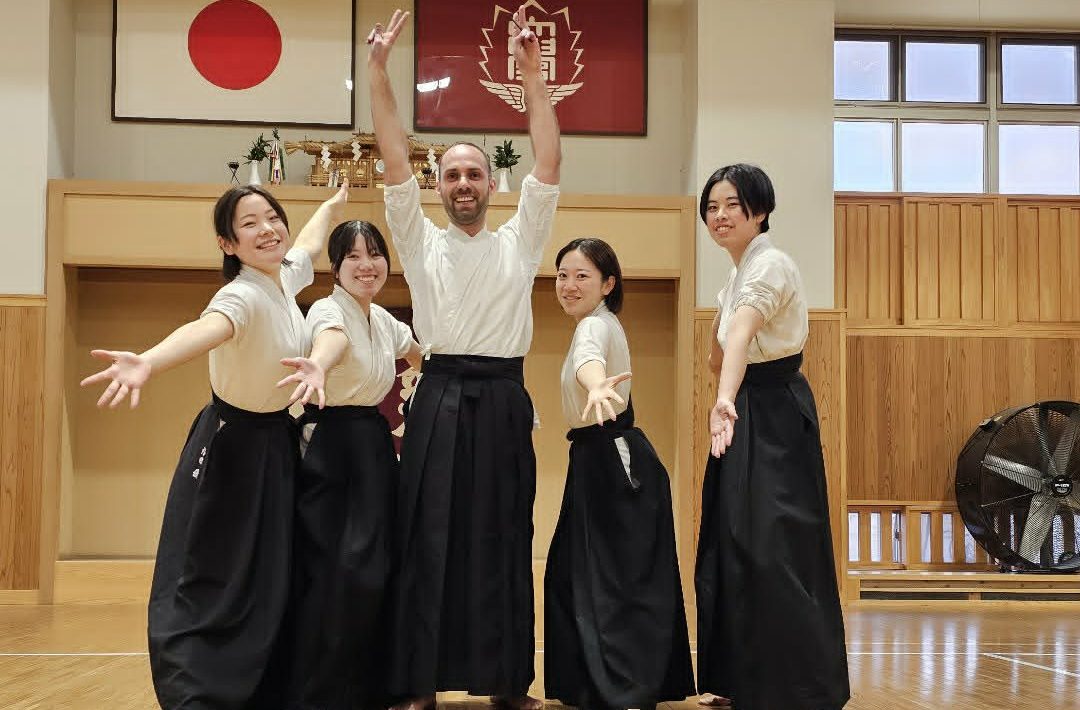
by Joe Hafner
A year ago, I packed my bogu and along with my other belongings and moved from a small town in Switzerland to the big city of Fukuoka. My goal was to improve both my Naginata and my Japanese. Thanks to the support and kindness of Imaura-sensei and Nakamura-sensei, I was allowed to train with the Fukuoka University Naginata Club.
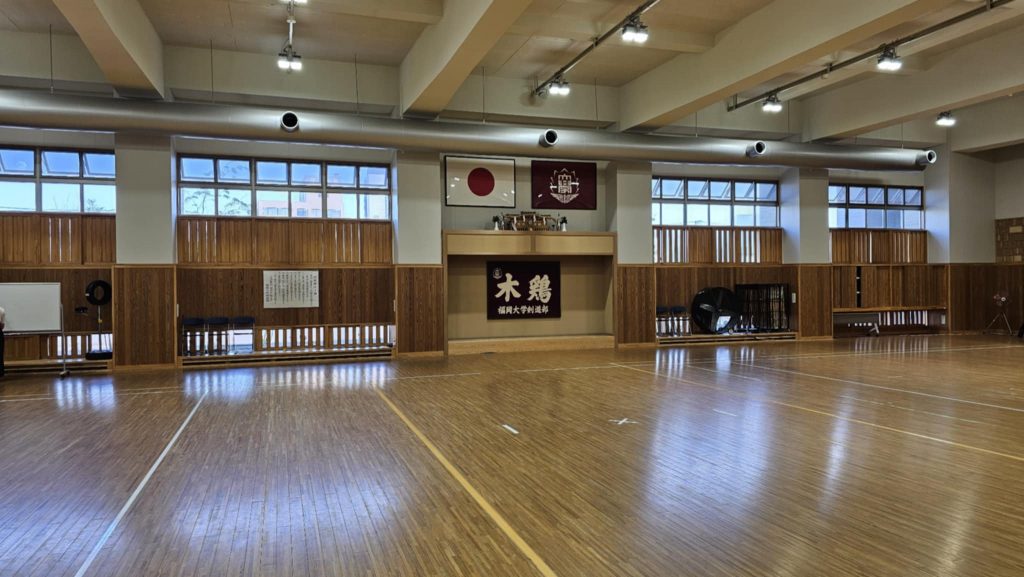
Shortly after my arrival, I was invited to a 合宿 (training camp) together with high school students from the region. There, I was officially introduced to the club. The training was different from what I was used to: more direct feedback from senpai, less intervention from sensei, more reflection on my own weaknesses, and a lot of drills – really, a lot of them! From the very first training session, I saw how high the bar had been set. Training in the company of university students, especially at Fukuoka University, meant training with some of the best in western Japan. The precision and efficiency of my senpai impressed me deeply. I knew I had to give my best to be able to keep up. I trained diligently, up to five times a week. At times, it was challenging to balance my training schedule with going to language school.
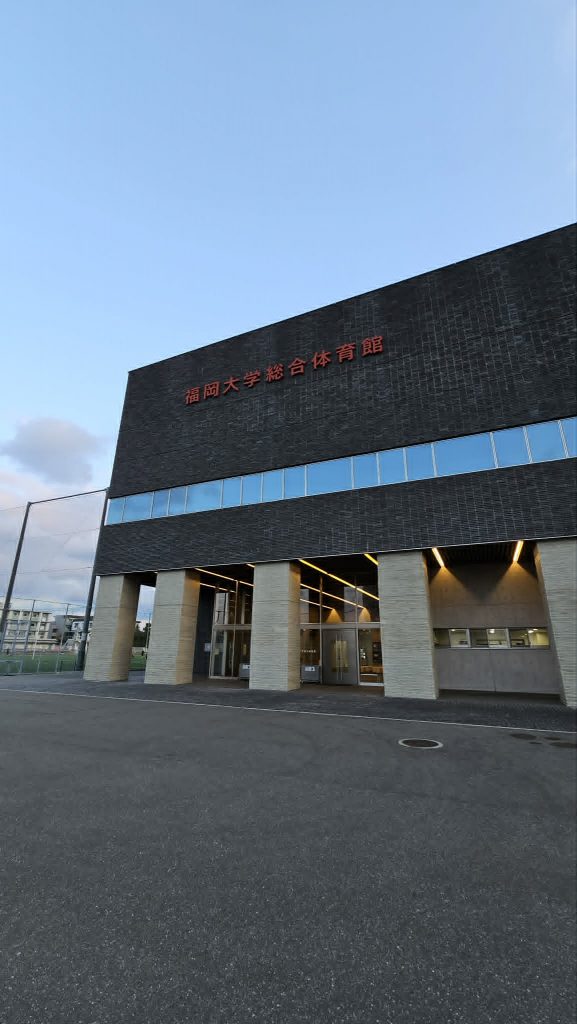
Still, after a while I noticed significant improvement in my abilities. Due to the aforementioned scheduling conflicts, I was ultimately unable to train as often as I had hoped but I am nevertheless grateful for each and every minute I was able to learn from them. In December, I took my nidan exam. To my surprise I was not the only foreigner – Anna from the Russian Naginata Federation also participated in the shinsa. Both of us passed successfully. But where there is light, there is also shadow. The language barrier posed quite the challenge. While much can be explained through gestures, one needs a deeper understanding of the language in order to fully grasp and incorporate a more detailed feedback which goes beyond movement. Because of this, I think a lot of feedback may have got lost in translation. Even though I took notes and asked many questions, I still found myself repeating mistakes. The unfamiliar terminology made for another challenge. For example, 下がり際 (sagarigiwa) and 中段払って一本 (chūdan haratte ippon) were terms I had never before encountered in Europe. However, while understanding the exercises and to me the feedback was a small challenge in itself, the most difficult part to me was asking questions. I think every language learner can relate to that – Understanding is always easier than putting them together. Now that one year has passed, I feel that I have gathered a lot of knowledge, learned many skills, and I am grateful for the many opportunities to train with different people.
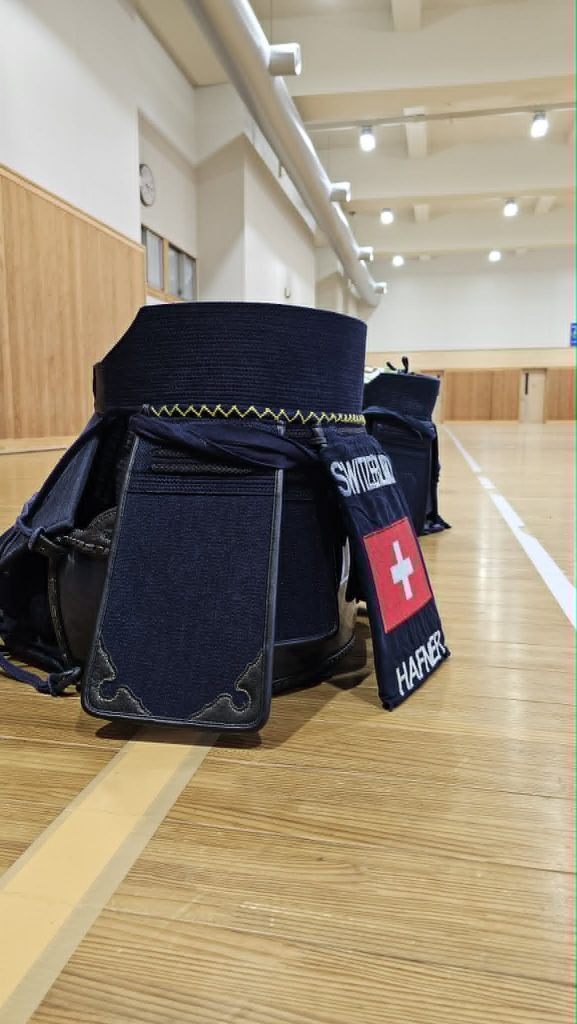
The experience was both rewarding and demanding. I especially enjoyed being able to exchange notes and thoughts with students from other schools and regions. I hope that one day I can return and show them how much I’ve improved thanks to their advice. For now, it’s time to return home, but not without taking a bit of Fukuoka back to Switzerland. Thanks for reading