
by David D’hose, Kei Tsukamaki and Shannon Rabanal
I wanted to share a truly exceptional experience with you, as very few people have had the opportunity to go through it so far.
To begin with, it is worth knowing that there are three levels of referee qualification in naginata: **Isshu**, **Nishu**, and **Sanshu**. Access to each level is restricted according to rank: Sanshu is available from 3rd Dan, Nishu from 5th Dan, and Isshu at an even higher level (renshi).
In Japan, these qualifications are not permanent. Referees are expected to maintain their certification every year by attending referee seminars and officiating at competitions. Until now, however, overseas practitioners have been granted some flexibility, as the Japanese understand that it is difficult for us to attend as many seminars and tournaments as they do.
Even so, obtaining these qualifications is demanding. They require a significant amount of practice as well as instruction from certified sensei. While the Sanshu seminar is usually offered to international practitioners alongside the INF seminar held during the World Championships, the Nishu seminar is currently organized only once a year—and only in Japan.
The course is divided into two weekends several months apart and concludes with both a written examination and a practical examination before a panel of two Kyoshi sensei and three Hanshi sensei.
Before describing the examination itself, it is important to understand the philosophy behind this training.
Contrary to what one might expect, its primary purpose is not to teach you how to referee. Instead, the sensei first evaluate your own technical level. Their reasoning is simple: how can you accurately judge the performance of others if your own technique is not sufficiently developed?
In other words, throughout the seminar you are assessed just as much as a practitioner as you are as a future referee.
Since the course was spread over two weekends separated by several months, I had to organize… two trips to Japan!
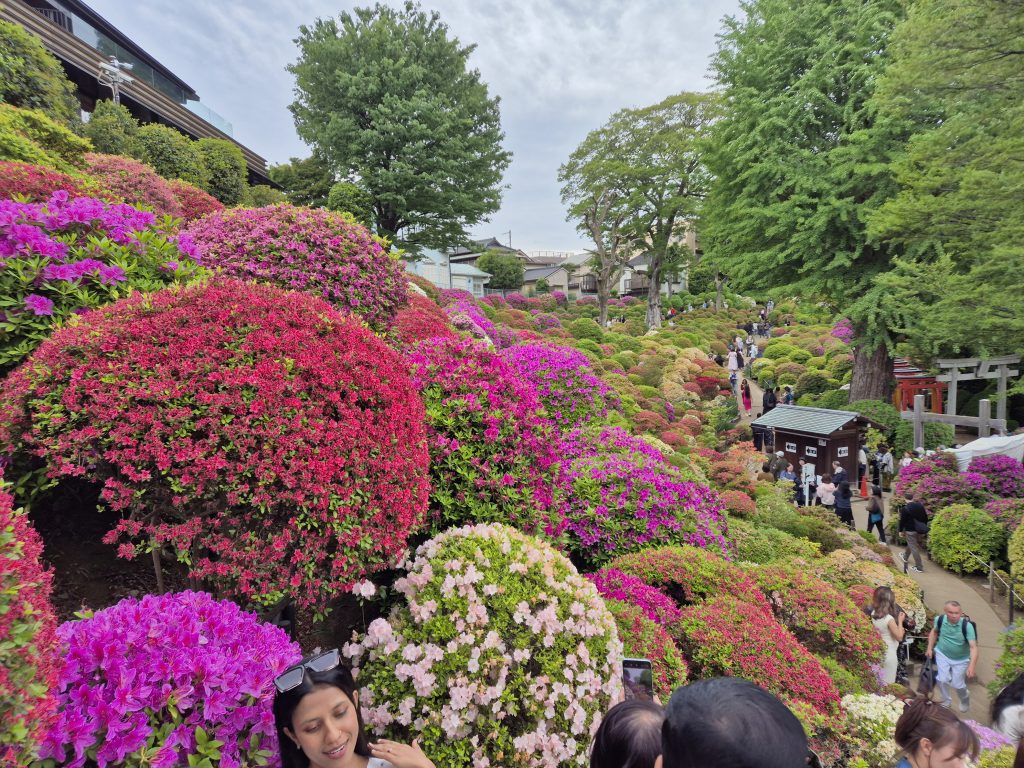
The first seminar took place in April, one of the most beautiful seasons to visit Japan. I took the opportunity to do some sightseeing and admire the magnificent temples surrounded by blooming azaleas.
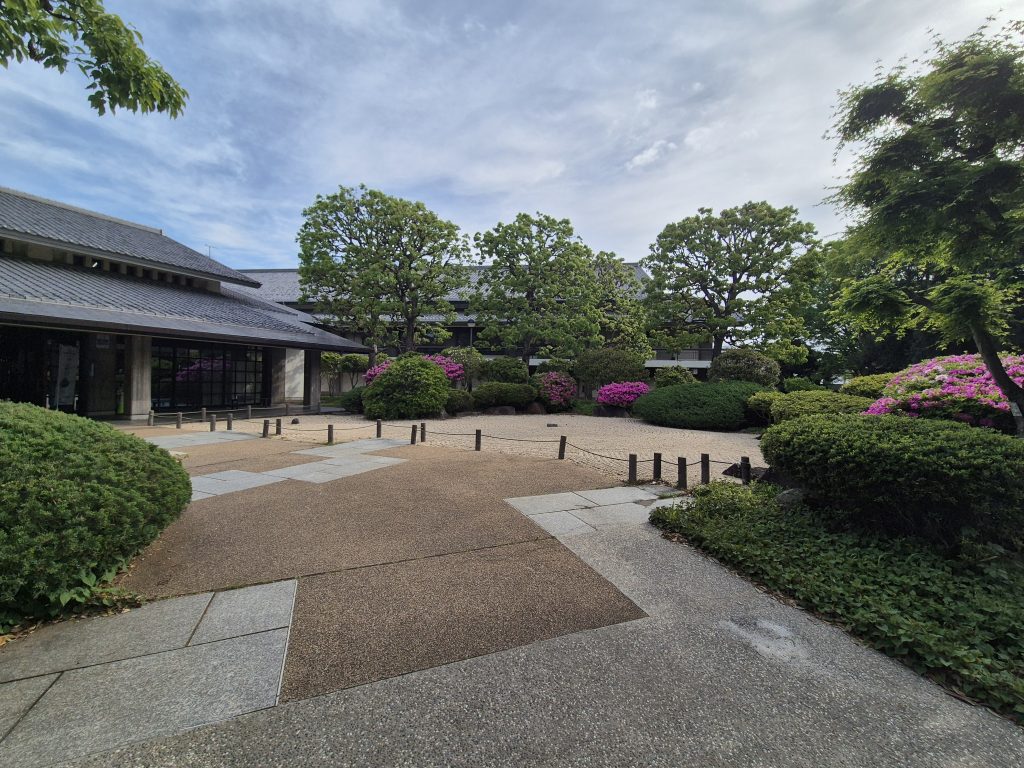
The seminar was held at the Kanagawa Budokan, near Yokohama, a wonderful dojo and an inspiring place to train.
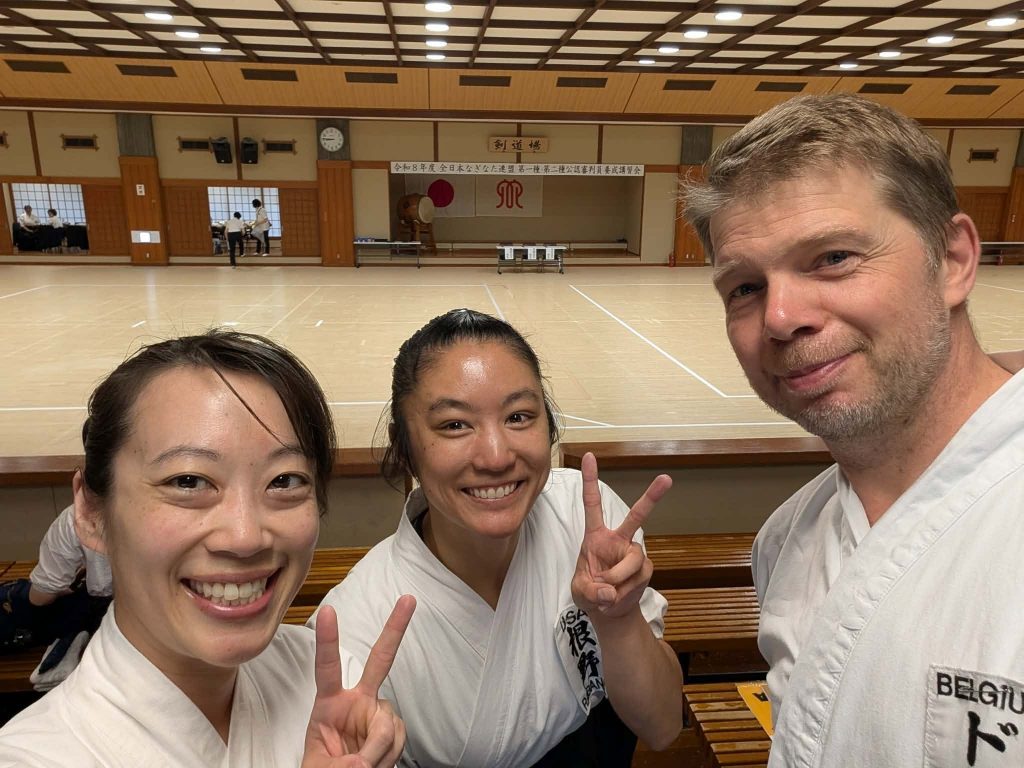
I was also delighted to meet up with Kei Tsukamaki and Shannon Rabanal from the United States. Their presence made things much easier for me, especially since Kei speaks fluent Japanese and even teaches the language.
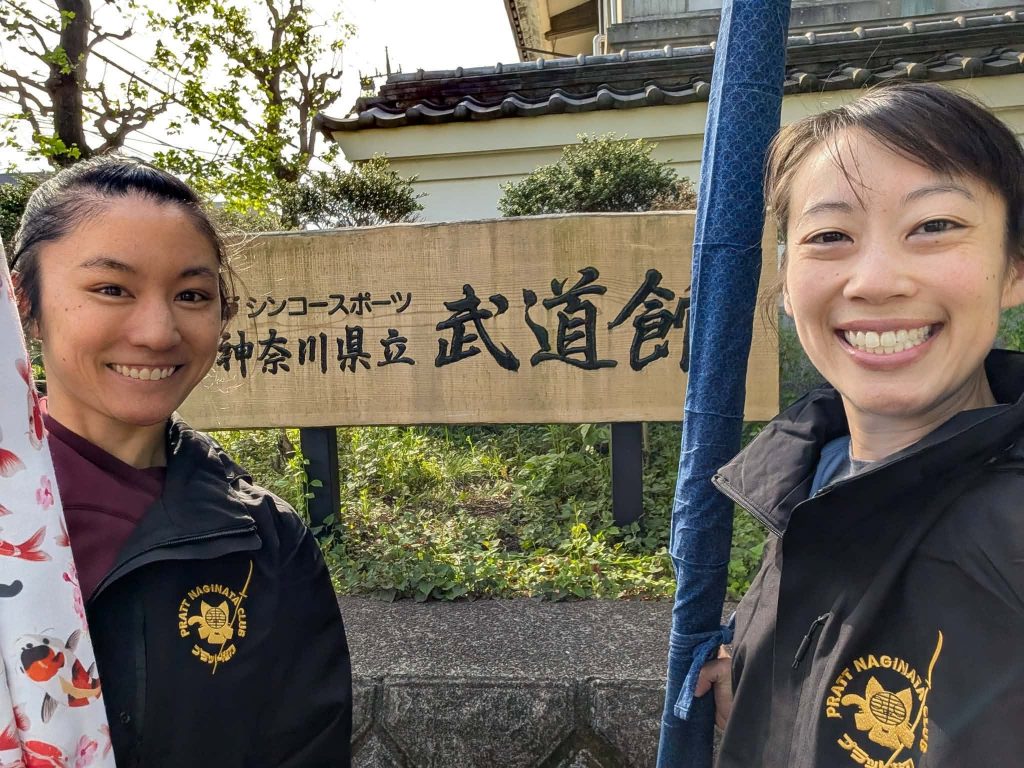
Another surprise awaited us: the organizers had not planned to lend naginata to the international participants. Fortunately, the American team had managed to bring extra naginata in their luggage and kindly lent me one. This was an enormous help, especially since I was already travelling with everything I needed for eight days of sightseeing.
I remain deeply grateful to them.
Saturday morning was devoted to a comprehensive review of the technical fundamentals: the Shikake-Oji as well as all the Zen Nihon Kata.
From the very beginning, Takahashi Sensei and Tanimoto-sensei reminded us that our attitude, commitment, and technical ability would be observed throughout the entire seminar. The final examination would be only one part of their overall assessment.
There were around twenty participants, ranging from 5th Dan to Renshi, creating a serious yet friendly atmosphere. Among them I recognized a practitioner from Taiwan as well as a world-class competitor whom I had previously met at the World Championships in Denver.
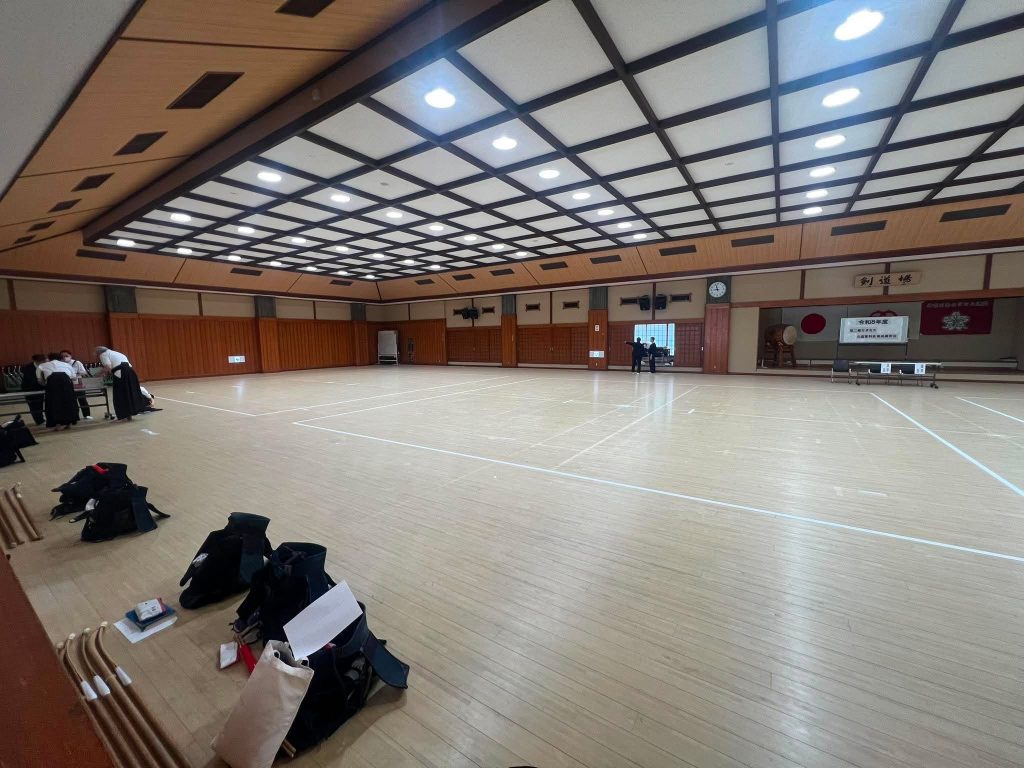
Corrections came constantly.
Every detail mattered.
More than once, I felt as though I had become a beginner again—a first Dan all over again.
It was only in the afternoon that we finally picked up the referee flags.
Before judging any matches, we practised the fundamental movements: how to raise the flags, how to move, where to stand, and how to distribute the flags correctly. Every step and every gesture was carefully corrected.
Then came the refereeing of Engi and Shiai.
Every decision had to be justified.
Why award the point?
Why reject that strike?
What technical criteria supported our judgment?
At the same time, the competitors themselves received detailed explanations about the validity of their techniques: precision, posture, distance, control, and many other aspects.
In the end, refereeing became an outstanding technical lesson in itself.
At the end of the day, we returned to the manuals.
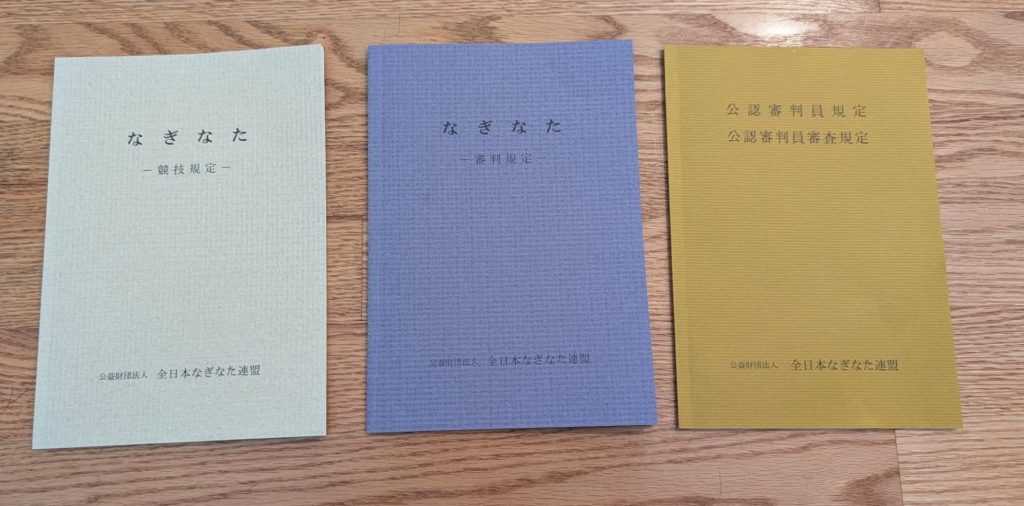
The sensei emphasized several key concepts—Yuko-Datotsu, the role of the Shimpan-cho—and, with a smile, reminded us:
“Some of these topics might appear in the examination…”
The message was clear.
Despite all their valuable advice, we still had plenty to study.
On Saturday evening, Kei, Shannon and I enjoyed a well-deserved dinner together, discussing everything we had learned during the day. Sunday followed much the same format, with even more practical refereeing exercises and match scenarios.
Before we left, the sensei reminded us one last time to work on every weakness they had pointed out during the seminar.
Returning to Europe certainly did not mean returning to a quiet life.
For the next two months I practised the Shikake-Oji and match situations every day while also studying all the theoretical material. I must admit that I was no longer used to memorizing so much information, so I was glad to have those two months to spread out the workload.
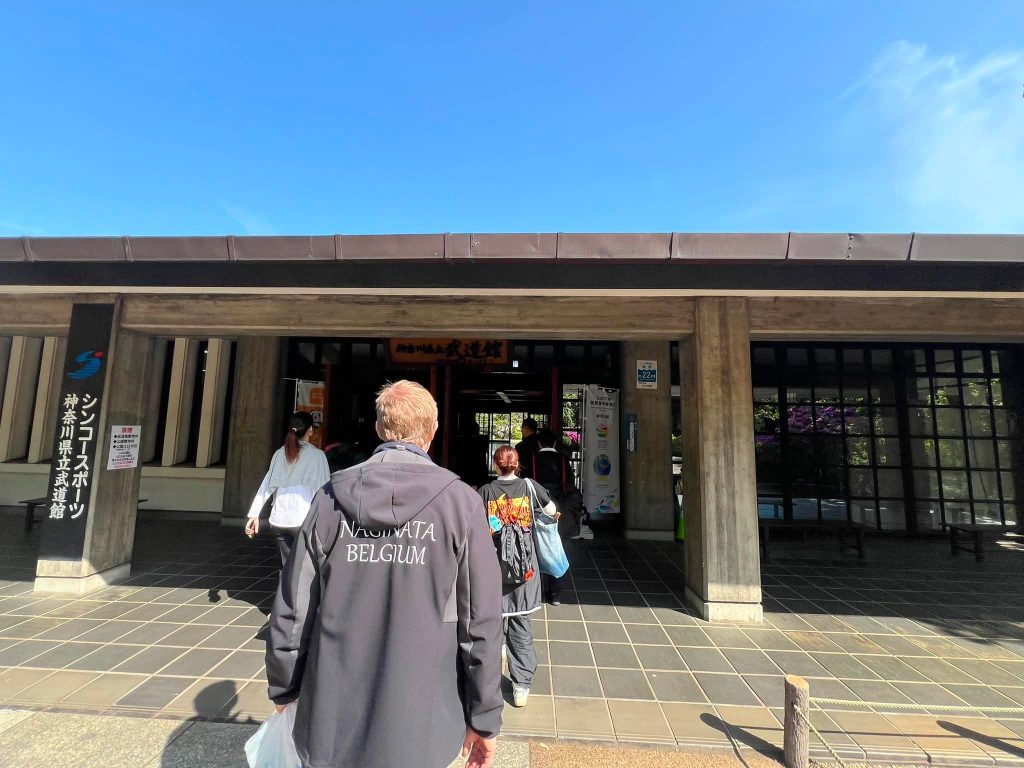
At the end of June, the second seminar finally arrived.
From the moment we entered the dojo, the tension was obvious.
The sensei explained the examination procedure. We would be required to perform Shikake-Oji numbers 1, 5, and 6, referee them, then participate in several Shiai before refereeing those matches as well.
Saturday served as a full rehearsal.
We also learned that three Hanshi—Yoshii Sensei, Ohno Sensei, and Nakamura Sensei—would attend the examination.
Their mere arrival in the dojo noticeably increased everyone’s stress level.
At the same time, an Isshu seminar and examination were taking place with around ten additional participants.
That evening, everyone returned home to study.
I think it is fair to say that nobody enjoyed a particularly relaxing evening…
The following morning, even before training began, everyone was still reviewing their notes.
After a brief warm-up focusing on the Shikake-Oji, we were given one final hour to study before the written examination.
It consisted of four questions, carefully selected from the topics we had spent weeks reviewing.
The entire afternoon was devoted to the practical examination.
One by one, each participant performed the required Shikake-Oji, refereed them, took part in Shiai, and then served as a referee for the matches.
When everything was finished, the sensei withdrew to deliberate.
The wait felt endless.
Knowing that many of us had international flights to catch, they kindly agreed to tell us the outcome unofficially before the official results were released.
About thirty minutes later, they returned.
We had passed!
The results would only become official a few days later, but that hardly mattered.
Shannon had tears in her eyes.
As for the rest of us, the smiles on our faces spoke volumes about the relief and happiness we felt.
There was only one thing left to do:
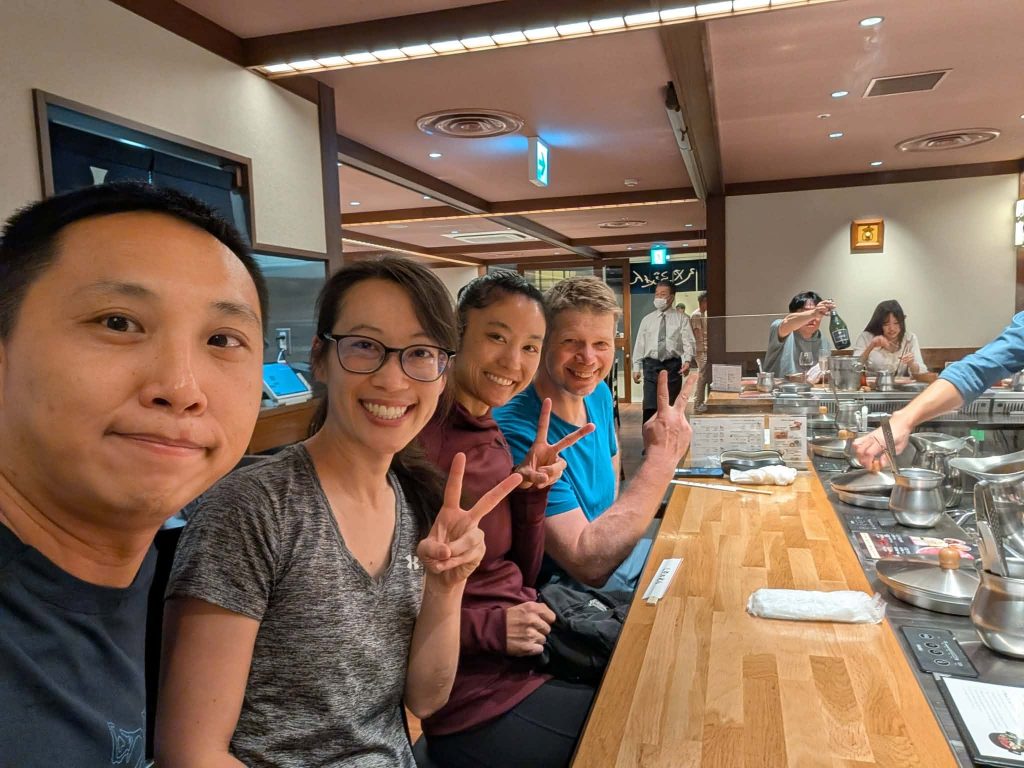
celebrate this unforgettable experience over a wonderful Japanese dinner.
Comments from Kei Tsukamaki, United States Naginata Federation
As D’hose-sensei expressed so eloquently, participating in the Nishu Shinpan Certification Course was an incredible experience for me as well. What struck me most were two points:
First, the exceptional quality of naginata training and instruction and everyone’s passion for and dedication to lifelong learning. We were all there to refine and hone our techniques and our minds. I expected this, and it was so fulfilling to be steeped in Naginata practice.
Second, what I didn’t expect, was the level of joy, fun, and community I would feel. Traveling to Japanese twice in two months is a big commitment, but my feelings of anticipation and happiness at seeing my Nishu friends in June were just as rewarding as the naginata training itself. As D’hose-sensei wrote, I was able to translate from Japanese to English for him and Shannon. This experience has taught me the value and meaning of naginata community and what we can achieve together.