
By Jonathan Gerlache
One year ago, I was sitting in my living room, playing a video game set in Japan during the Sengoku (Warring States) period. One of the characters could fight using a naginata. Out of curiosity, after I shut down my console, I grabbed my phone and looked for an answer to the question: “Is naginata still a thing today?” At that time, I had no idea how much this question would affect my life. Not only does naginata still exist today, having evolved into what we now know as atarashii naginata, but I also discovered that it is practiced in Belgium, my home country. Even better: the dojo in Brussels was located just two kilometres from my apartment. When destiny calls…
So, on 28 March 2025, I attended my first trial lesson.
By coincidence, one year later, I found myself in Japan. While the primary purpose of my trip was to visit one of my best friends, who now lives in Imabari, in Ehime Prefecture, on the island of Shikoku, I couldn’t resist adding a few naginata twists to my journey.
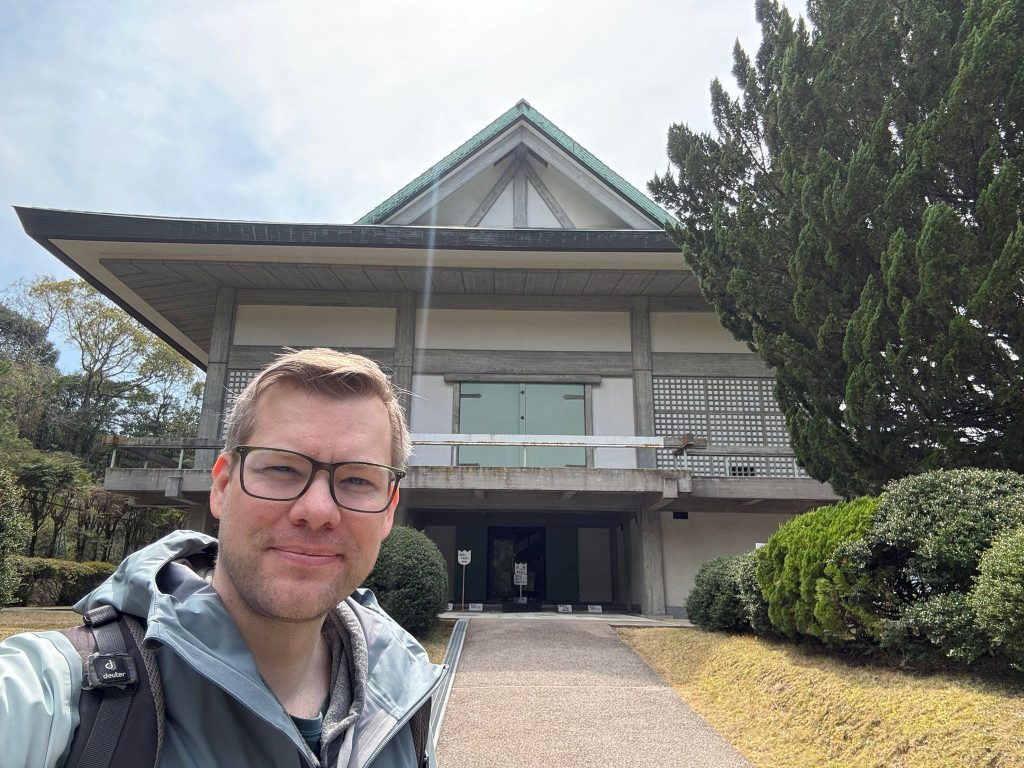
The first one was a visit to Ōyamazumi-jinja, on Ōmishima Island. I heard about this place from the head of accounting at my company, who is very active in koryū. A treasure hall is attached to the shrine, where some very ancient weapons and armour are displayed, including… the blade of Benkei’s naginata. More than eight centuries later, it is still preserved there, bearing visible marks of battle.
It was also the first time I saw an armour made for a female warrior: Tsuruhime. She was the daughter of the shrine’s priest and an onna-musha who defended her island from invaders coming from Honshu during the 16th century.
From time to time, I got some naginata vibes in other places that I visited. The best one was at Imabari Castle, a mizujiro, or (former) sea castle, where I could see three complete naginata dating from the Edo period. Measuring between 225 and 251 centimetres, their blades varied in curvature and length, ranging from 41 to 60.8 centimetres.
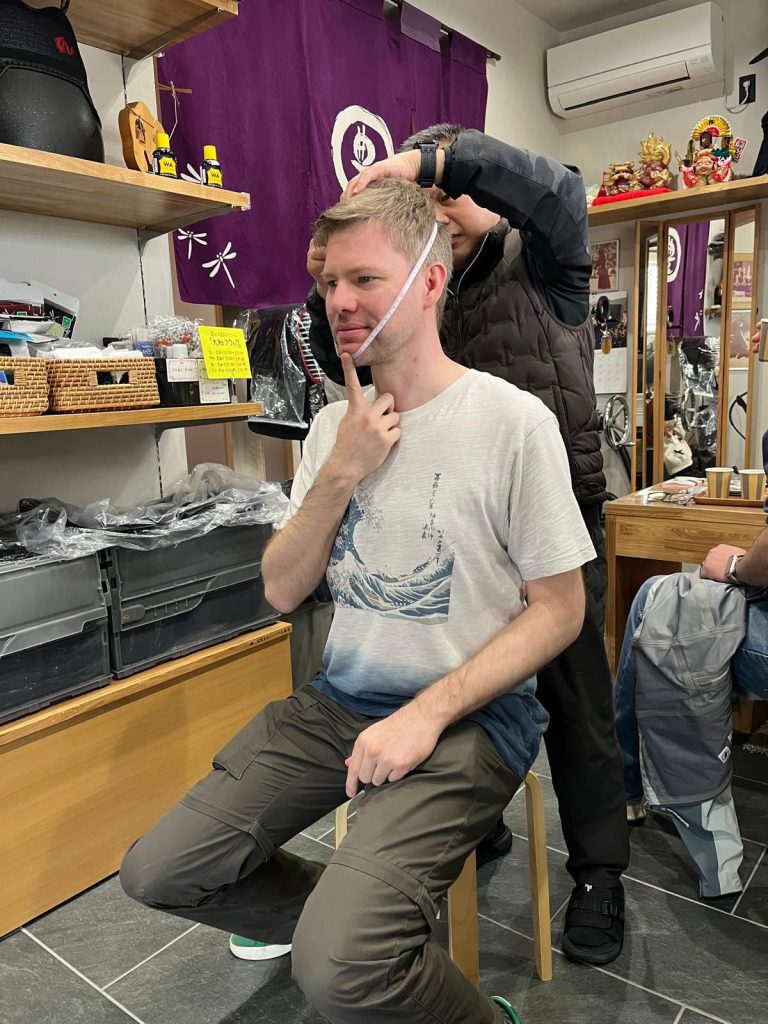
The second naginata twist of my visit was buying my own bōgu while in Japan. With the favourable exchange rate and the opportunity to avoid delivery fees, it was the perfect occasion. Héloïse and Hugo had already told us how much of a challenge buying naginata equipment on site could be. I can confirm everything they said, but I had a secret weapon: a friend who speaks Japanese.
We therefore went to Matsuyama, to a kendo shop. We knew in advance that it would be an order made by catalogue. As the shop owner was not used to selling naginata equipment, he called Ikemi-sensei for some advice. Some of you might know her, as she was the individual women’s world champion in 2011. She also won the All Japan Women’s Naginata Championships multiple times. The funny thing is that she was also the naginata teacher in high school of my friend’s wife.
The seller put pressure on his supplier to ensure that I would get my equipment before my departure from the region. After sharing my buying experience with my dojo, I received some requests to buy keikogi. I had already left Matsuyama by that time, but I tried again in another shop in Osaka. Unfortunately, it was also by order only, and sadly too late, as I had my flight the next day.
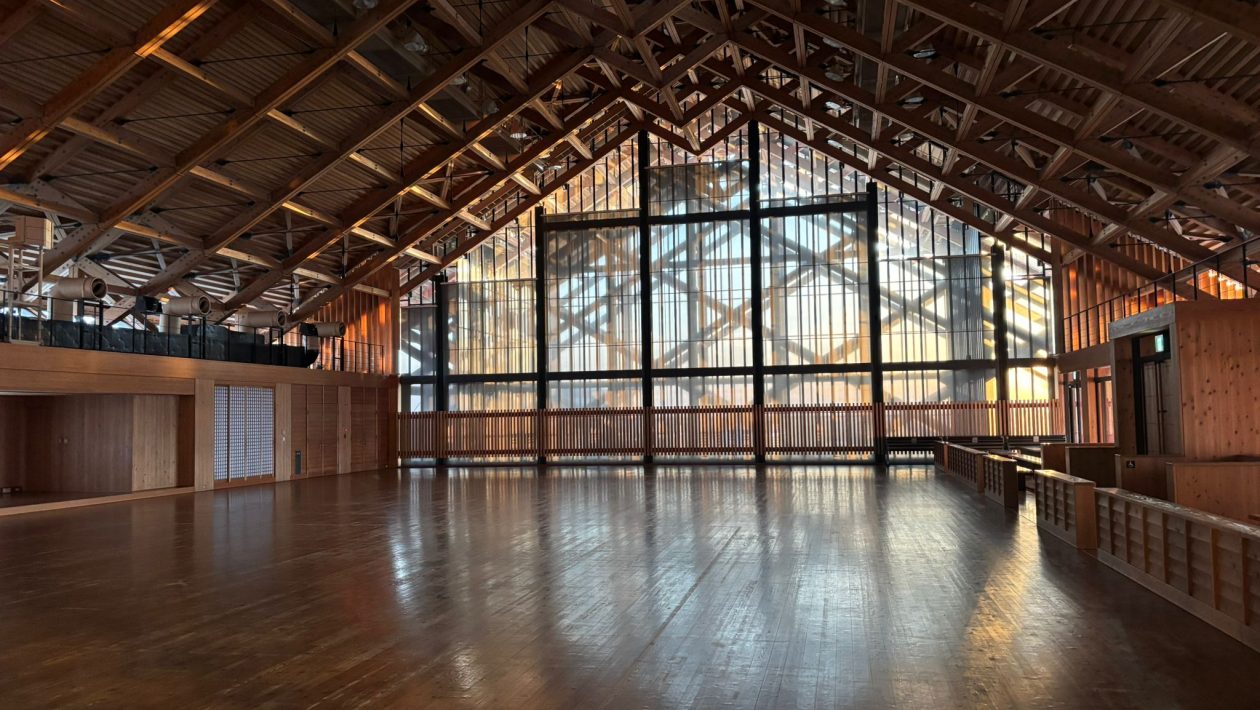
The third and final twist of my trip was practising in a Japanese dojo. With the support of David, our renshi, we contacted the International Naginata Federation to find out where I could train in Shikoku. I already knew that Takamatsu could be a potential destination, but the INF provided us with the training schedule of the Matsuyama dojo, which was a perfect location and easy to include in my trip.
So, on 26 March 2026 (two days before the anniversary of my first year of practice), I went to the Ehime Budokan, a place already familiar to those who attended the 2025 INF seminar.
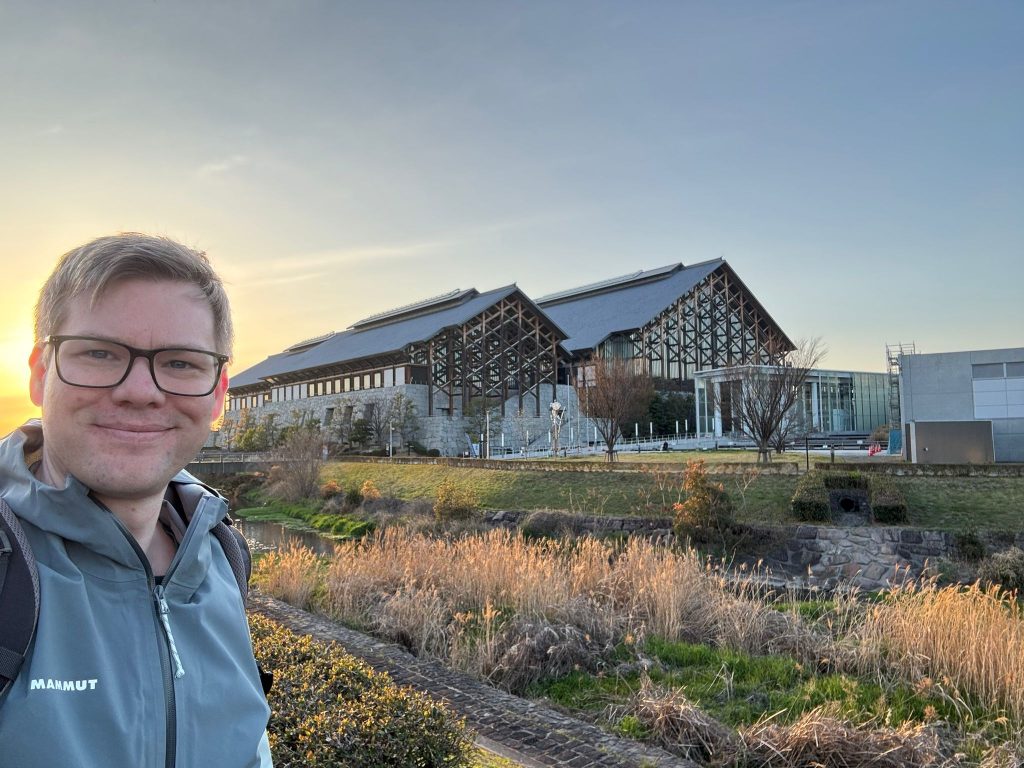
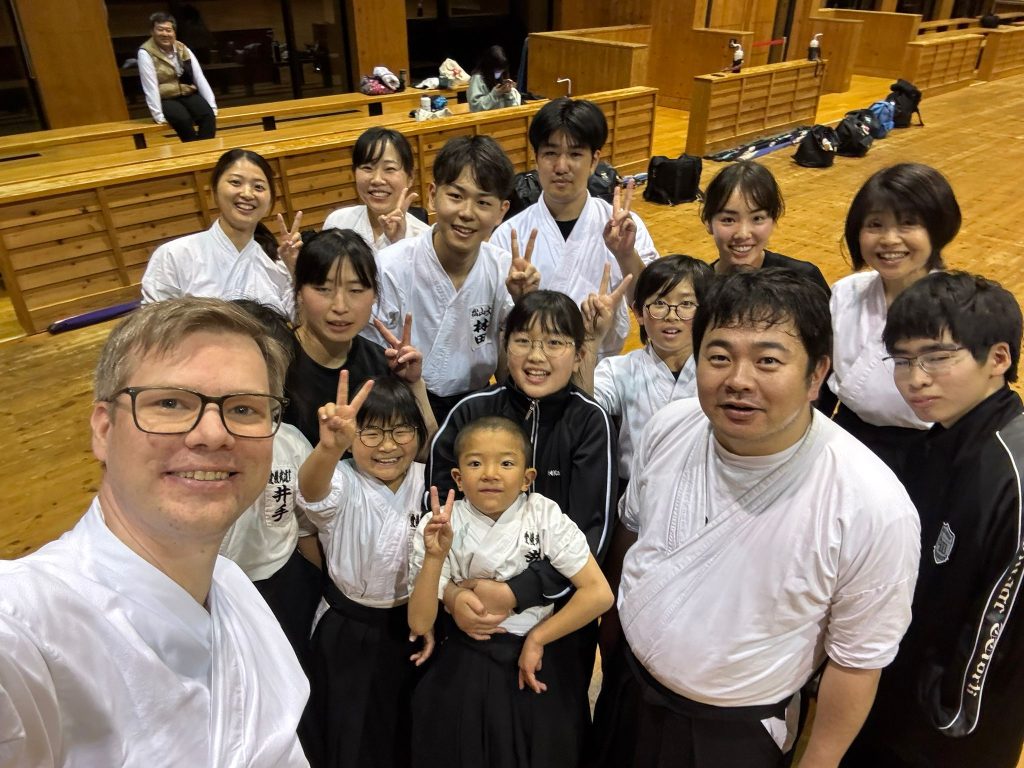
I was warmly welcomed by Saeki-sensei (renshi), Hino-sensei (3rd dan), and the other naginatakas of the dojo. Even though my Japanese dated back to my university years (a long time ago) and was quite rusty, we managed to go beyond the language barrier thanks to the teenagers of the dojo, who could speak English (sometimes supported by a phone translator).
While Saeki-sensei mainly supervised the Zen Nihon katas of the most advanced practitioners of the dojo, I trained with the teenagers under Hino-sensei’s guidance. After a short warm-up, we started doing lines of okuri-ashi (mae/ato), first without naginata, then with naginata, then with a partner, and finally with a ball under our armpit to ensure that our chudan had a correct arm position.
After performing a circular strike from an old naginata style (some kind of reverse furikaeshi starting from a waki stance, with the blade facing the ground), we moved on to uchikaeshi. In Brussels, we are used to doing three lines using a front–back–front sequence, but here they do it using a front–back–stationary sequence. Interesting.
Afterwards, we were positioned as we would be for kihon, but we only practised the first swing, joge-buri. We kept this configuration when performing the first five shikake-oji. So, we were all oji (and then shikake) at the same time. The feeling of being mirrors of one another was quite impressive.
We then worked on shikake-oji in small groups, with a cross on the ground, like in a competition. For the final part of the training, everyone put on their bōgu without the men (except for me, as mine had not arrived yet). We started with some strikes before performing so many waza that I can’t remember them all. What I do remember is that Hino-sensei really put the emphasis on avoiding unnecessary movements and keeping a good seme, even while defending. I was quite impressed by how some of my partners changed when expressing their fighting spirit, turning in a second from a funny person into a fierce daredevil, executing accurate and quick strikes.
At the end of the training, I joined the children in cleaning the dojo, followed by the traditional group photos. I also had the pleasure of introducing them to Belgian chocolates, a huge success, especially with the youngest members. As there weren’t many trains to go back to the centre of Matsuyama, Hino-sensei kindly drove me back to my hotel by car.
This training session remains one of the top experiences I had during my trip.
If you ever find yourself in the area, I highly encourage you to visit them.