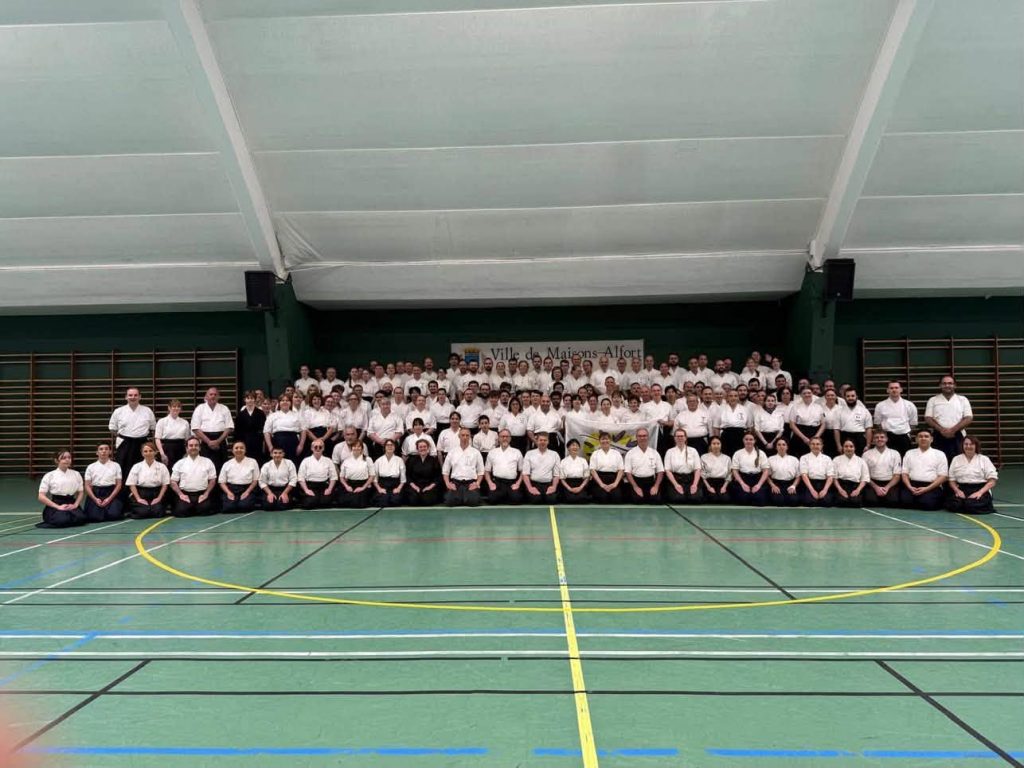

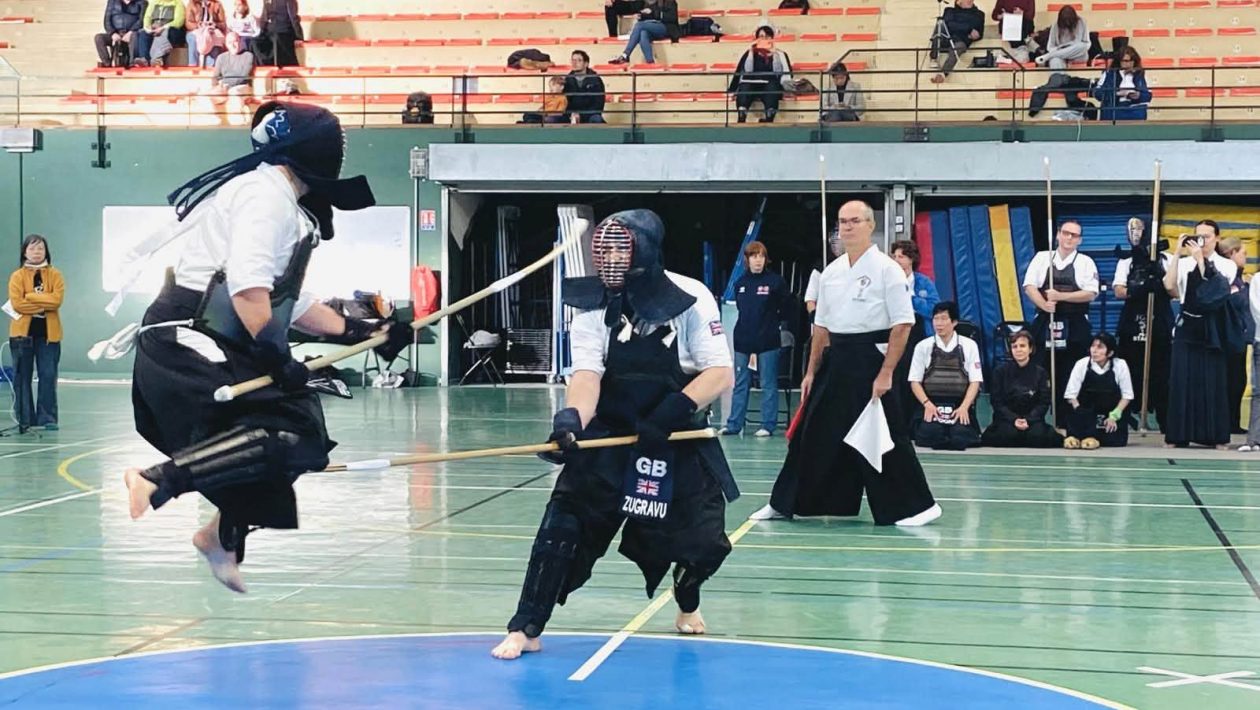
by David D’hose
Friday, 23 October, 3:00 pm. Representatives of the different member nations of the European Naginata Federation begin arriving at the Maisons-Alfort sports centre. The joy of seeing one another again is written all over their faces, while the fatigue is still visible among those who have travelled long distances to join us.
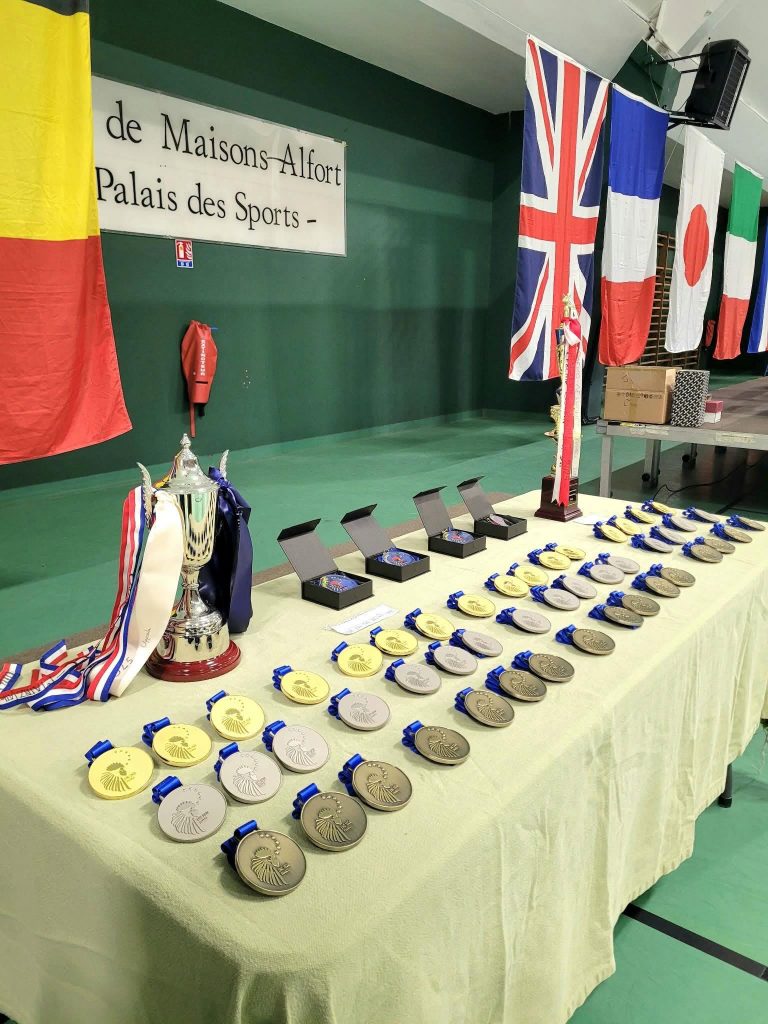
Inside the hall, members of the French Federation are busy making the final preparations for the competition, which will begin early the following morning.
We discover the room where our meeting is to take place. Although its arrangement suggests that the choice may have been somewhat last-minute, we do not dwell on these details and decide to get started without delay with the Shinpan meeting.
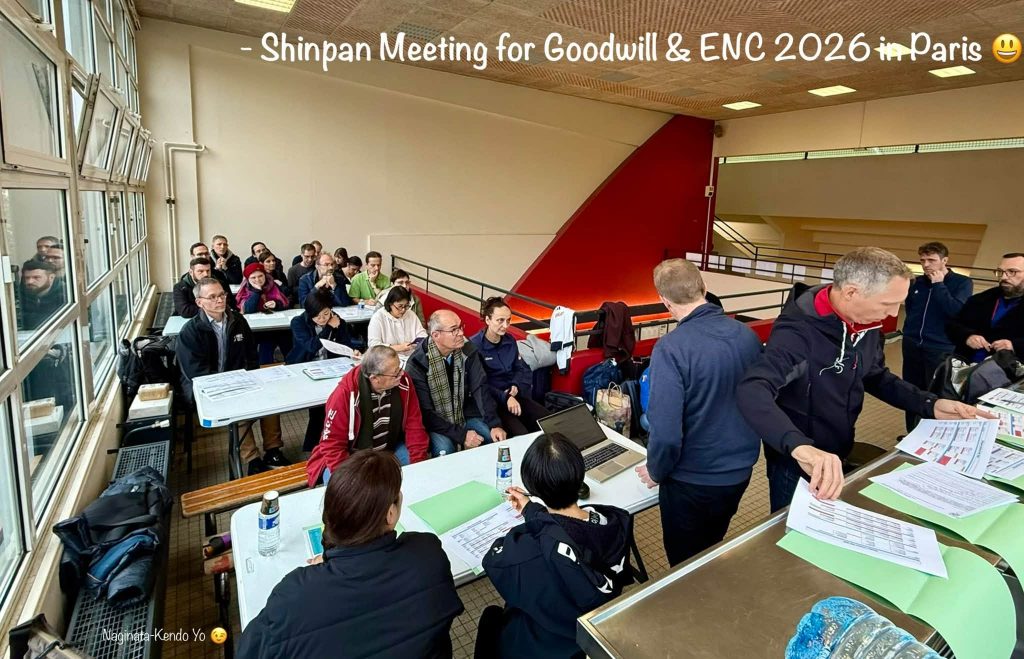
Masuda sensei and Yoshii sensei join us. They acknowledge with a nod the various points discussed that they consider appropriate, and occasionally come back to us with questions or additional comments whenever clarification is needed.
The meeting comes to an end fairly quickly. I then find myself wondering whether we should have spent more time reviewing the refereeing procedures. The following day’s competition will unfortunately provide me with some answers!
At 4:00 pm, the managers’ meeting allows us to clarify several organisational matters and distribute the programmes to the different delegations. We are always proud and happy to organise such events, and the distribution of official documents, particularly the programme, is an important milestone in the preparations. However, the Technical Director and I share the feeling that better communication between the ENF Board and the French Federation, before the programme was put together, would have been beneficial.
5:00 pm. The General Assembly, chaired by our President, gives rise to numerous questions and discussions. Between the financial report, the Technical Director’s recommendations, the Board’s proposals and the various votes, the discussions take some time. Nevertheless, the Assembly confirms two important dates for the future of our federation: the next European seminar in Spain in 2027 and the 2028 European Championships, which will take place in the Netherlands.
After this particularly busy day, everyone tries to get some rest and recharge their batteries ahead of the big event the following morning, scheduled to begin at 8:30 am.
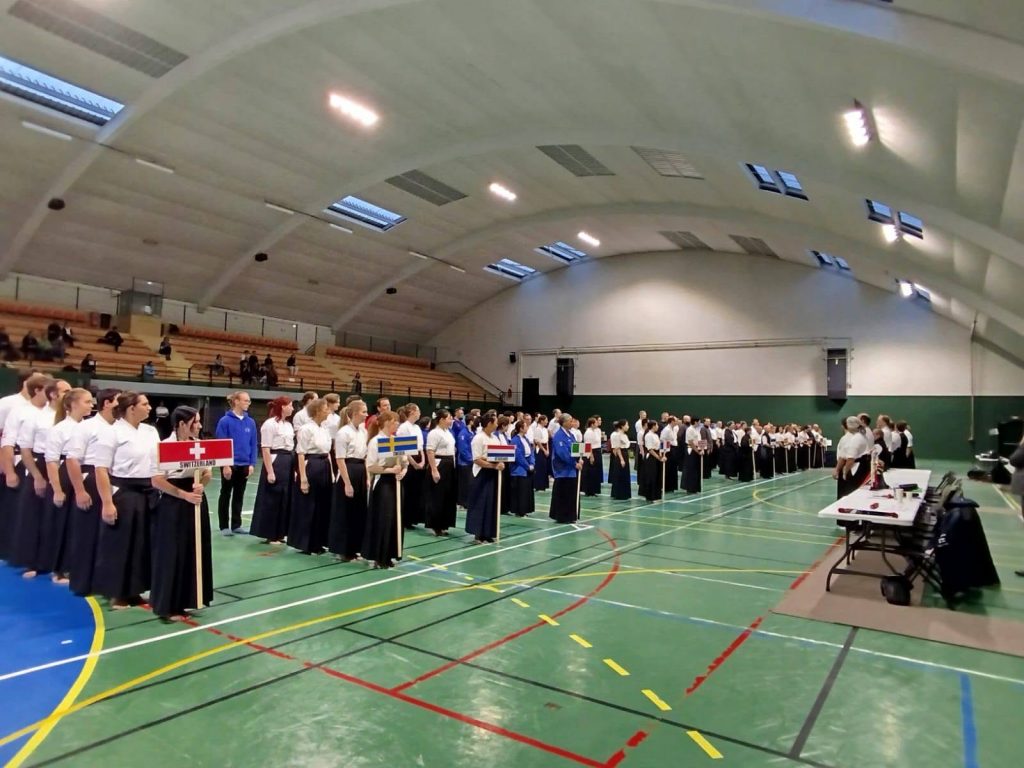
Saturday, 24 October: Let the competitions begin!
The 15th European Championships take place in a huge sports hall in Maisons-Alfort, just outside Paris.
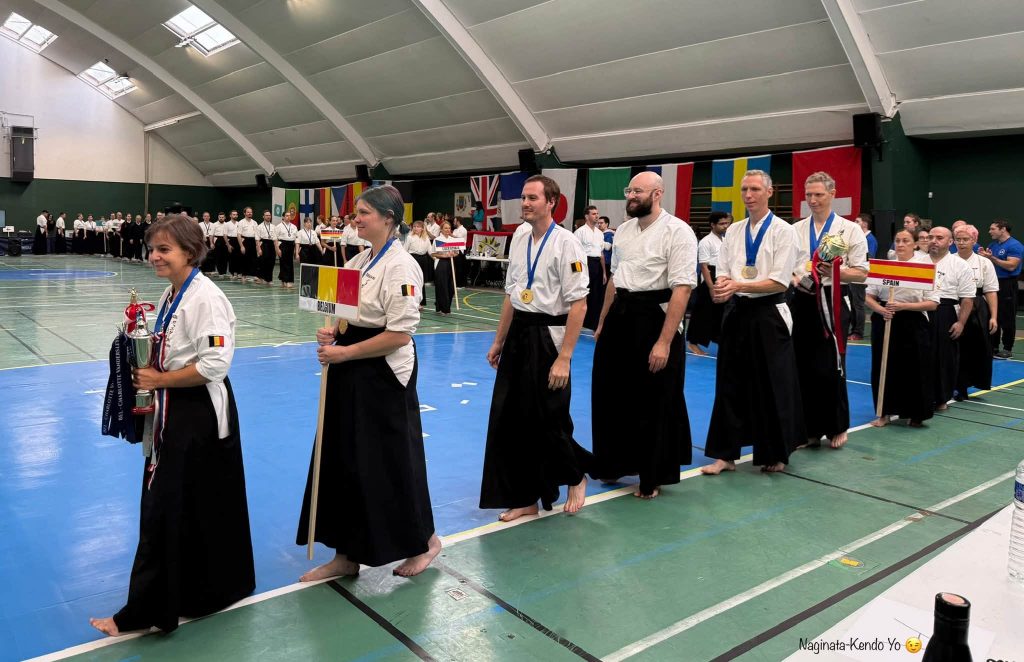
Although relatively short, the opening ceremony is always a particularly moving moment for the participants. Representatives of the 14 participating nations parade to the sound of impressive music, in front of the officials and beneath the flags displayed on the shomen wall.
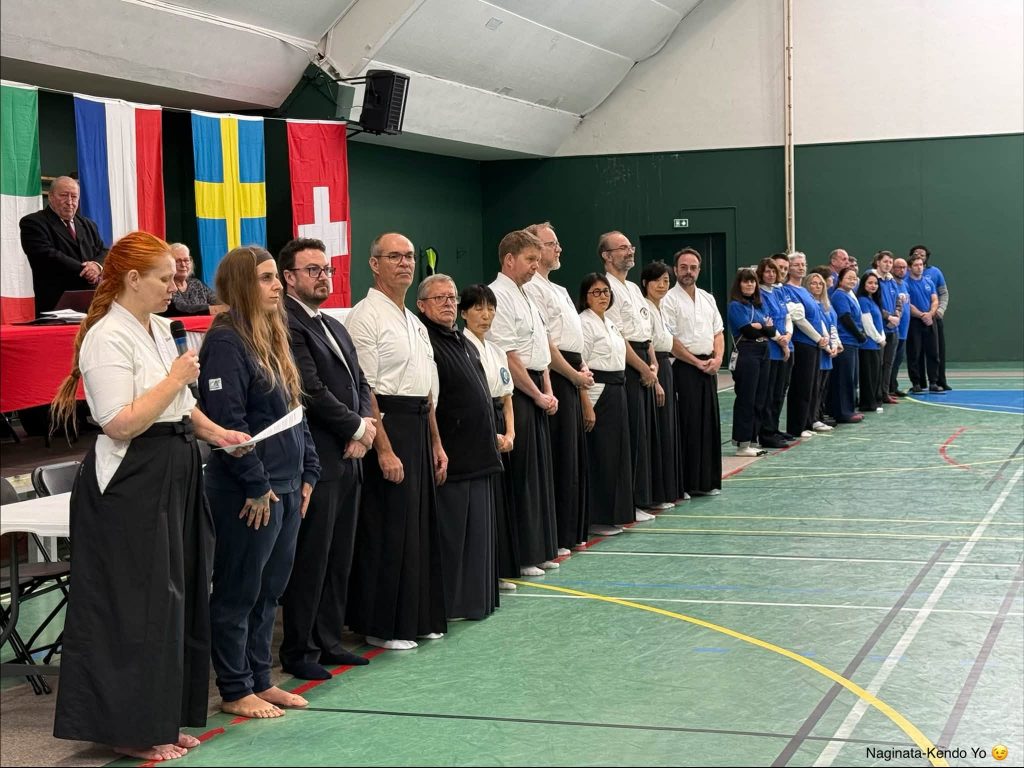
The winners of the previous edition are invited to hand back their trophies, which are once again up for grabs. The officials then deliver their speeches, encouraging everyone to give their best, fight with courage and uphold the true spirit of fair play.
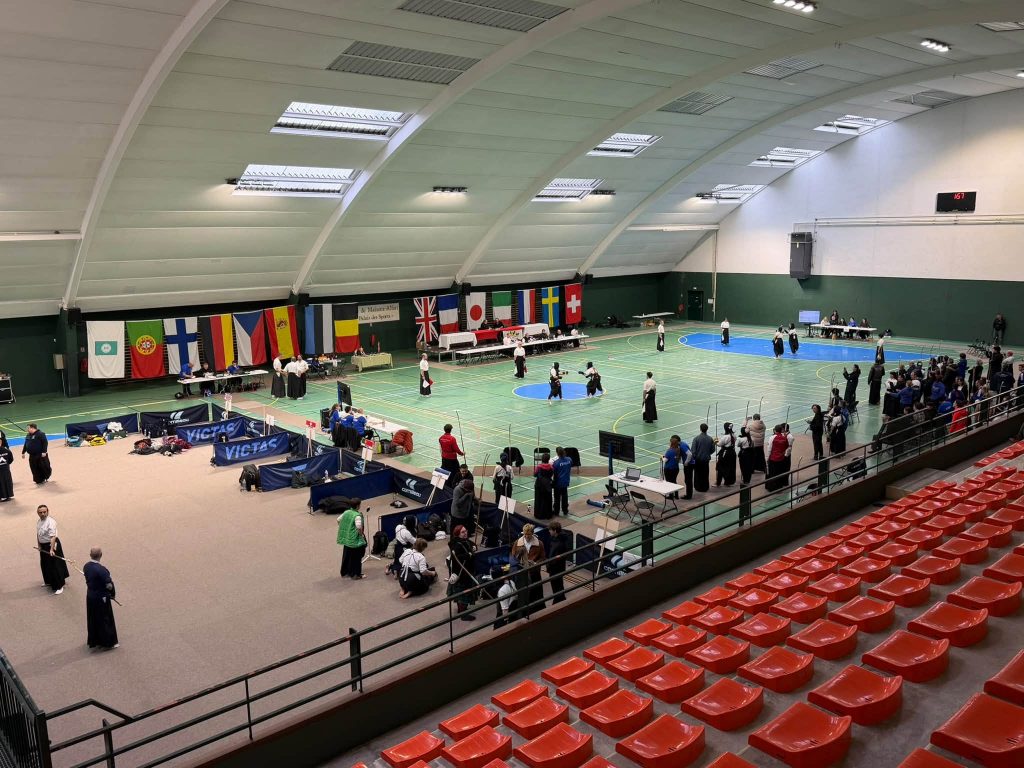
Following this wonderful ceremony, and taking into account the large number of participants, our Technical Director has carefully organised the competition schedule to ensure that everyone can make the most of this great event.
We begin with the women’s team competition, taking place on two shiaijo. It is a long morning filled with particularly dynamic matches. Despite having a team of only two competitors, Belgium manages to win the event! The Eastern European practitioners, led by Daria Litunenko, deliver an impressive performance to secure second place, while France takes an honourable third place.
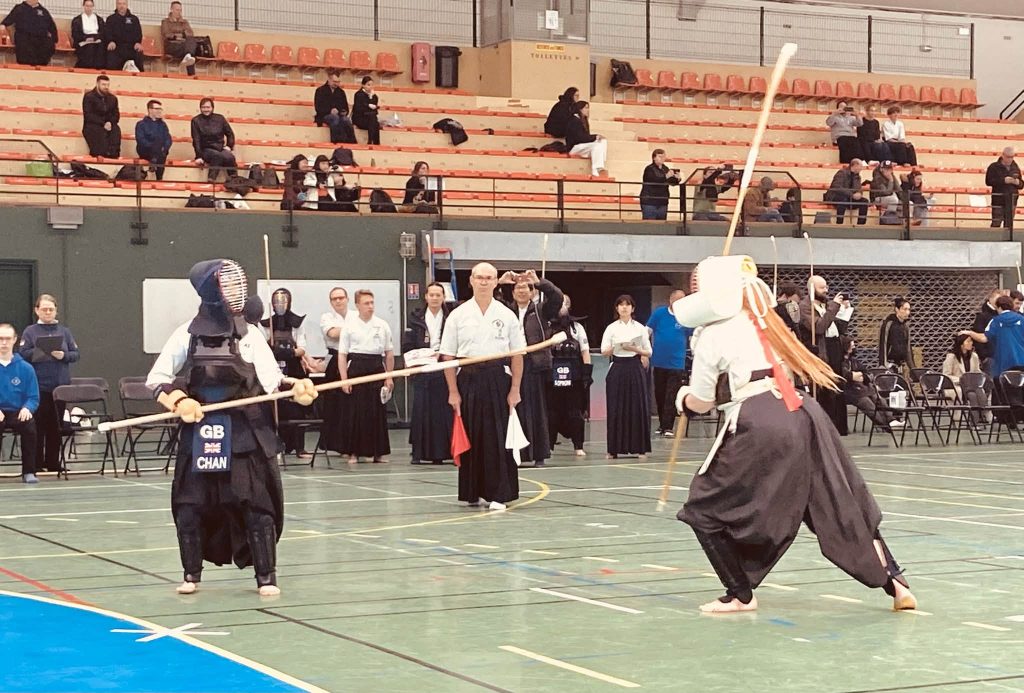
Hardly has this exciting team competition come to an end when the female participants move straight on to the individual tournament.
Once again, the standard of competition is excellent. Germany’s Marie-Luise Göbel claims a very fine third place, and, once again, Belgium and France face each other in a thrilling final. This time, it is Belgium that takes the victory!
After a lunch break, during which the organisers treat us to some excellent local specialities, the competitions resume with the men’s team event.
Belgium and France dominate this competition, but it is also a pleasure to see Spain and Switzerland making progress throughout the tournament, while Germany manages to secure a place on the podium alongside the ever-present Belgian and French favourites.
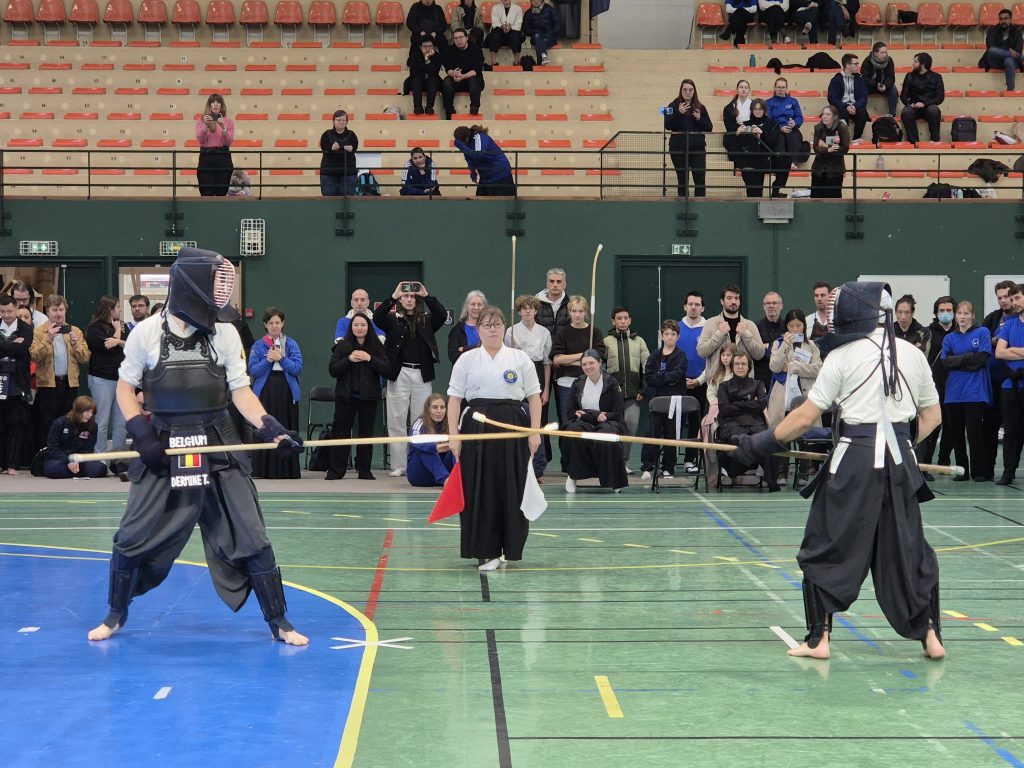
The day concludes with the men’s individual competition. This is certainly not going to be the shortest event of the championships! Although we often find ourselves watching the familiar Belgian showdown in the final, the matches are full of unexpected twists and turns, providing plenty of excitement along the way.
Sunday, 25 October: Technique takes centre stage
After such an intense day and a good night’s rest, the second day of the championships begins with the technical competitions.
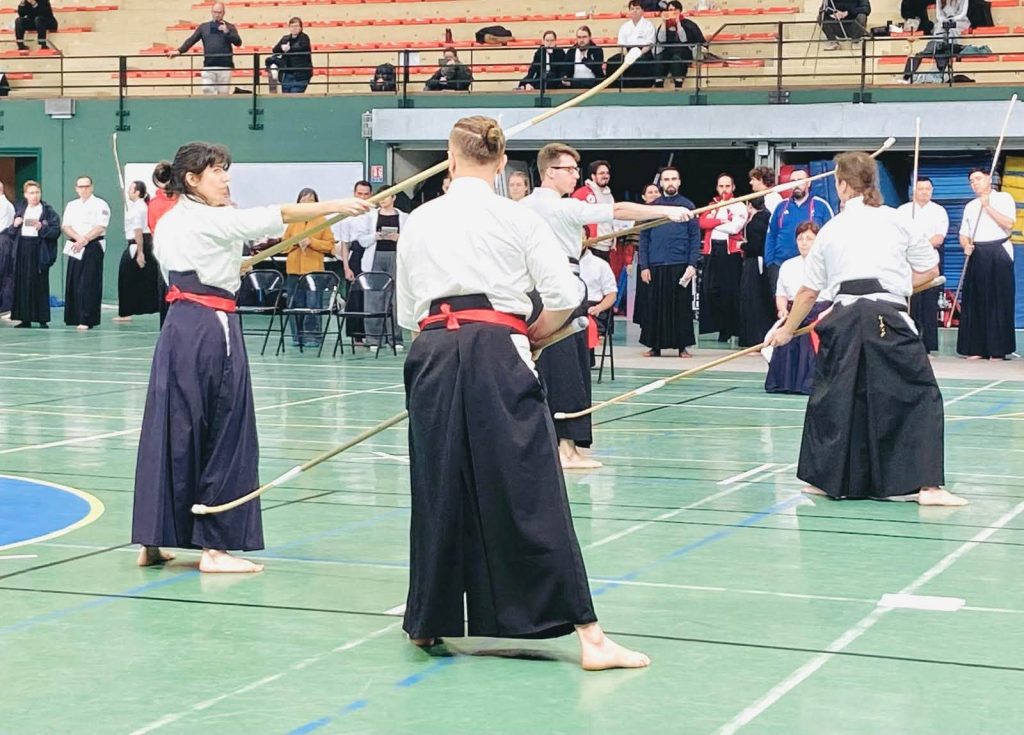
Pairs of practitioners are required to demonstrate Zen Nihon Naginata Kata 1, 3 and 5, followed by the Shikake-Oji competition, featuring kata 1, 4 and 8.
Although these events are still largely dominated by the most experienced nations within our federation, it is truly encouraging to see more and more countries presenting practitioners whose technical skills continue to improve. This is clear evidence of the development of our discipline throughout Europe!
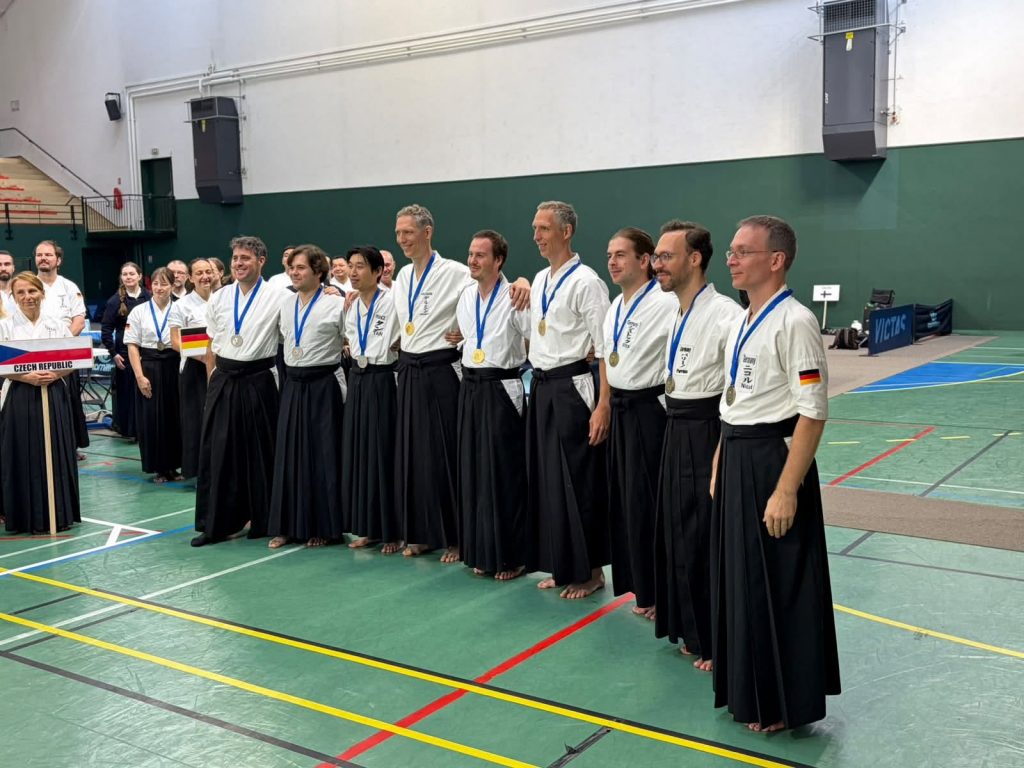
Next comes the eagerly awaited trophy ceremony. Eyes light up and smiles spread across faces as the magnificent medals, specially designed with this edition’s championship logo, are presented to the winners.
But the day is far from over! The competitions continue with the Goodwill Shikake-Oji tournament, followed by the Kyu individual and finally the Dan individual competitions.
These events may sometimes seem secondary compared with the European Championships themselves, but they are almost just as lengthy and provide their own share of wonderful moments of naginata.
One particularly memorable moment is the Dan final between Portugal and Spain. The match keeps the entire audience on the edge of their seats before ending with a magnificent Spanish tsuki!
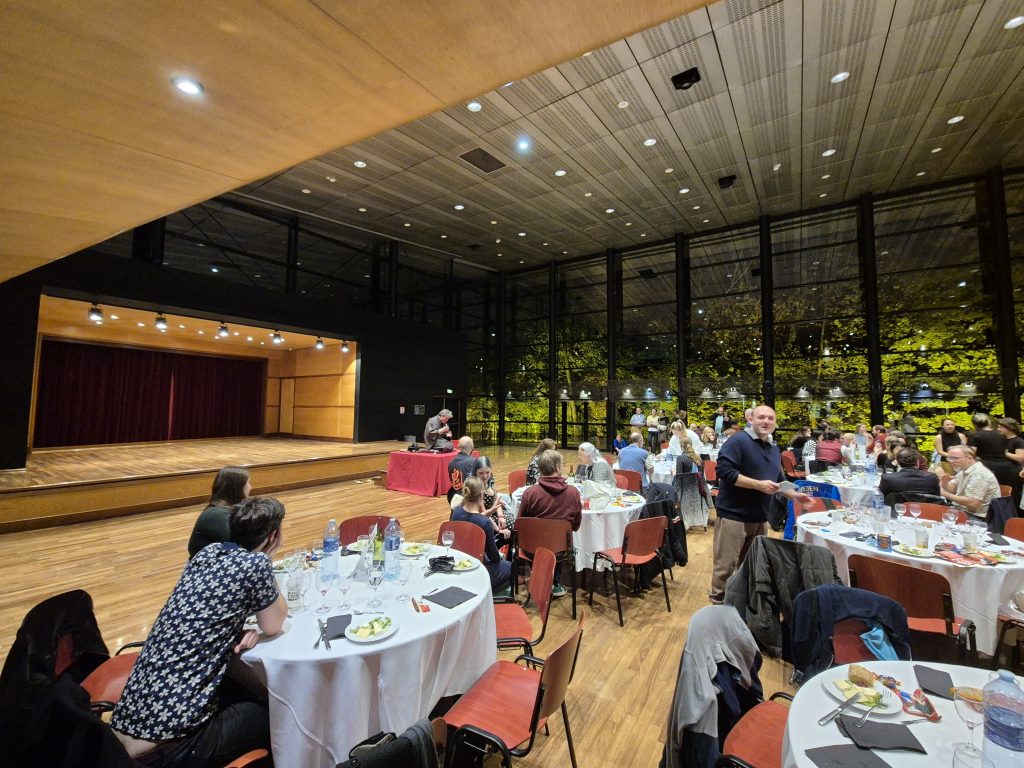
After these two days of competition, it is time for the traditional Sayonara party. A lovely meal, smiles, gifts and, above all, the pleasure of spending one last evening together create a warm atmosphere and bring sunshine to everyone’s hearts.
Monday and Tuesday: Two days of seminars to share and improve
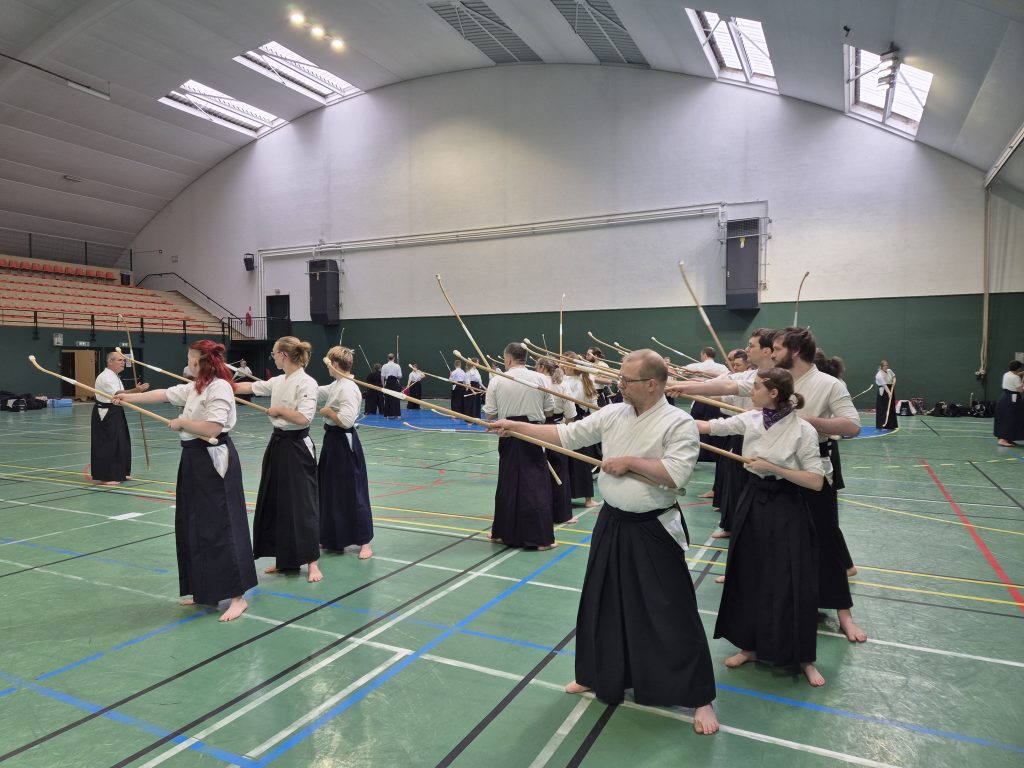
The following two days are dedicated to the European seminar. Yoshii, Masuda, D’hose, Berghaan and Delalande sensei share their knowledge and experience with no fewer than 150 practitioners from all corners of Europe.
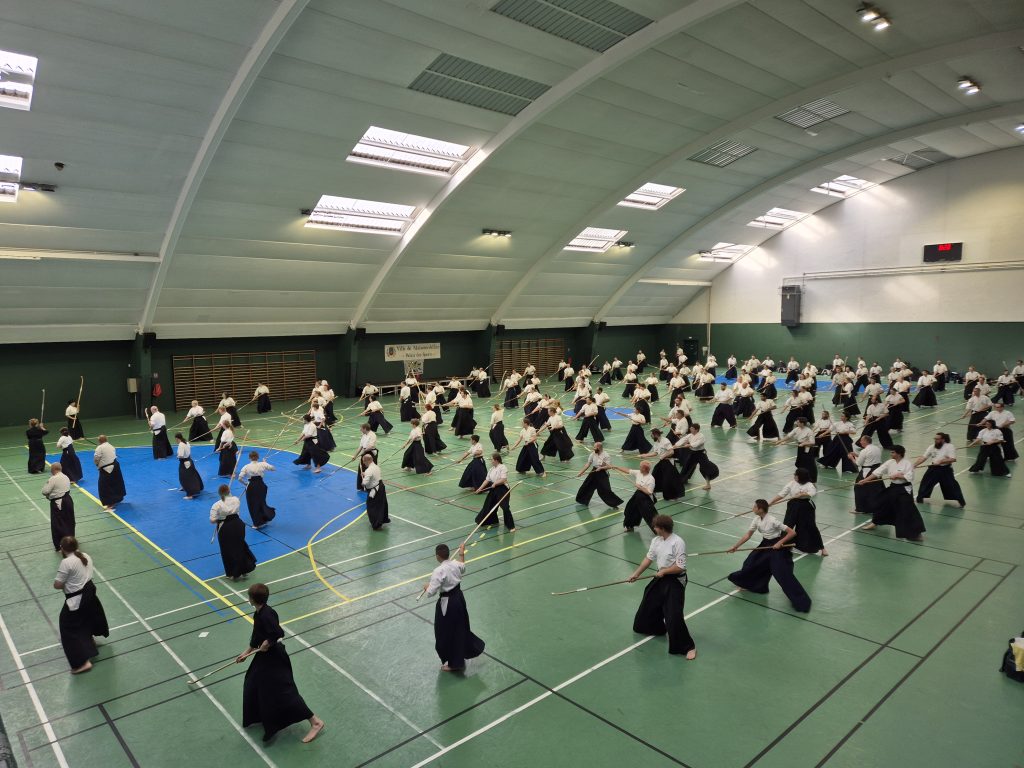
These days are filled with learning, exchanges and wonderful encounters. Everyone leaves with new knowledge, fresh ideas to work on and, without a doubt, precious memories.
The grading examinations, both written and technical, are not always easy, and not everyone manages to achieve their goal. Nevertheless, everyone takes away valuable lessons to help them continue improving and contribute to making future events even better.
Once again, we would like to warmly congratulate everyone who successfully passed their grading examinations, and extend our sincere thanks to all the organisers and volunteers of the French Federation for their tremendous dedication and hard work.
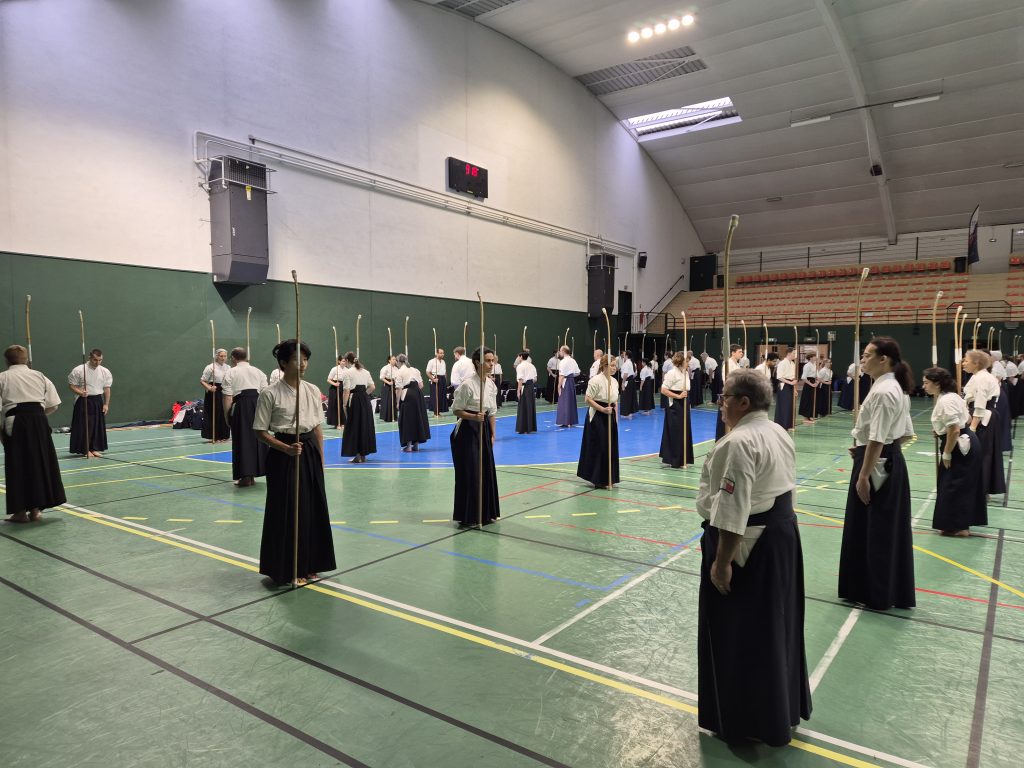
These 15th European Championships have been an exceptional edition, both in terms of their scale and the quality of the encounters and shared experiences. Four intense days that remind us once again that European naginata continues to grow, and that it is together that we are building its future.