
by Riccardo Elena
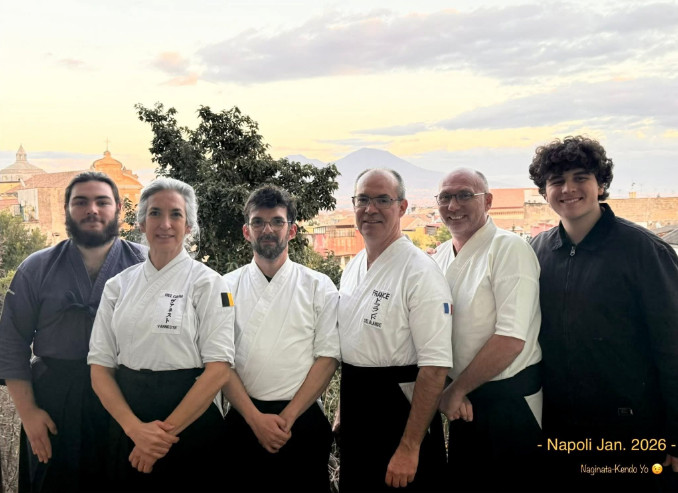
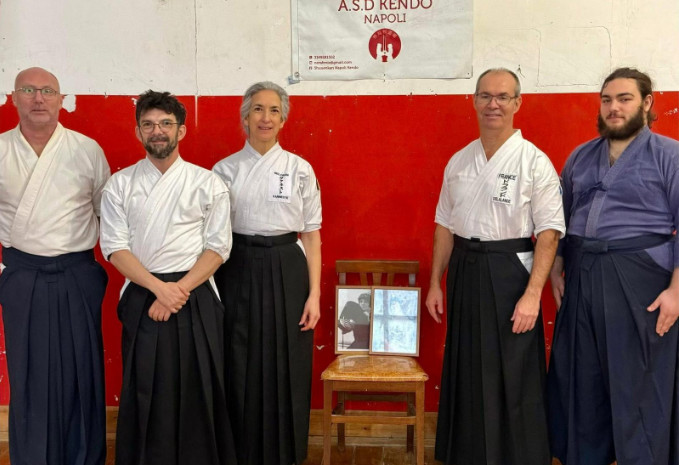
On the weekend of January 17-18, 2026, the Shuuenkan Dojo in Naples, Italy, had the honour of hosting an inspiring and technically enriching Naginata Seminar led by Loïc Delalande Sensei (Renshi) from France. He brought with him not only his immense expertise but also a contagious passion for the art of Naginata.
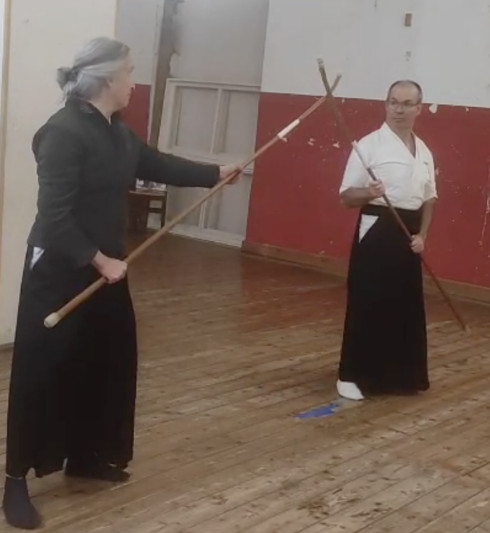
In addition to our local members, we were delighted to welcome Yolanda Vanneste sensei (Yondan) from Belgium, whose presence and knowledge further enriched the experience for all participants. This seminar marks another significant step in our ongoing efforts to deepen the understanding and practice of traditional Japanese martial arts under the Parthenope Project. Following last yearʼs successful seminar, focused on Shiai, this yearʼs edition offered a unique opportunity to return to the roots of our practice: the fundamentals and the meticulous construction of the Shikage-ōji.
The weekend was structured to build skills progressively. On Saturday, we focused on the essentials: perfecting body posture, ashisabaki, and seme. A particular emphasis was placed on the crucial role of breathing (kokyu) and how to synchronize it with body movements to generate true power and stability. We worked extensively on the primary kamae and the core swings, Joge-buri and Naname-buri, before applying these mechanics to basic uchi and uke. The afternoon was dedicated to translating these fundamentals into fluid Uchikaeshi, as well as Ipponme and Nihonme Shikage-ōji.
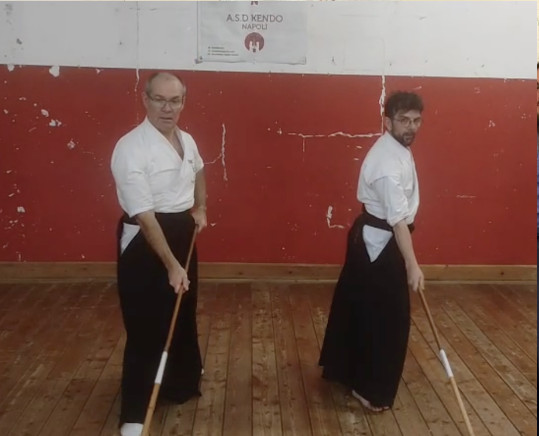
Sunday expanded our repertoire by introducing more complex movements necessary for the advanced Shikage-ōji. We studied Yoko-buri, the upward- cutting Naname-buri (shita-kara), and the rotational Furikaeshi-buri, which provided the technical keys to unlock Sanbonme, Yonhonme, and Gohonme.
What truly set this seminar apart, however, was the exceptional quality of the instruction. We were deeply impressed by the availability and dedication of the Sensei. They did not simply demonstrate techniques; they guided us step-by-step, ensuring that every student, regardless of level, could grasp the profound concepts underlying the discipline. Their hands-on approach and willingness to answer every question allowed us to internalize the Ri-ai of every movement, going beyond the mere physical form. We appreciated the clear, structured approach that built the practice from the ground up, making even complex sequences accessible. Loïc Senseiʼs teaching style was both engaging and rigorous, creating an environment of focused learning.
These occasions are invaluable for the growth of our dojo and the broader Naginata community in Italy and Europe. We extend our heartfelt gratitude to Loïc Sensei and Yolanda Sensei for their generosity in sharing their knowledge. We look forward to hosting more seminars in the future as we continue our journey in mastering the art of Naginata. Following the success of this weekend’s training, we are committed to continuing this path of learning and growth in 2027. We invite all practitioners, whether beginners or experienced, to join us for another enriching training opportunity next year. These gatherings not only strengthen our technical skills but also deepen the bonds within our community.